
Android
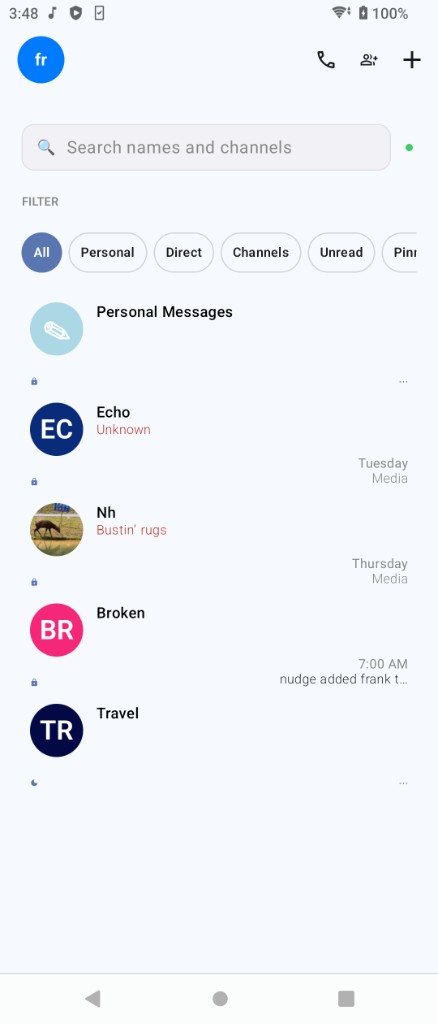
Light mode that feels native
Filter conversations by personal, direct, channels, unread, or pinned—with a clean interface built for everyday use.
Pre-release · Post-quantum security
Nudge is built for people who can’t afford leaks, outages, or “harvest now, decrypt later.” We treat censorship as an engineering problem to route around, and security as the baseline: encrypt everything—messages, documents, voice, and video.
Available on iOS, iPadOS, macOS, and Android
A polished, privacy-first experience on every screen—from your pocket to your desktop.
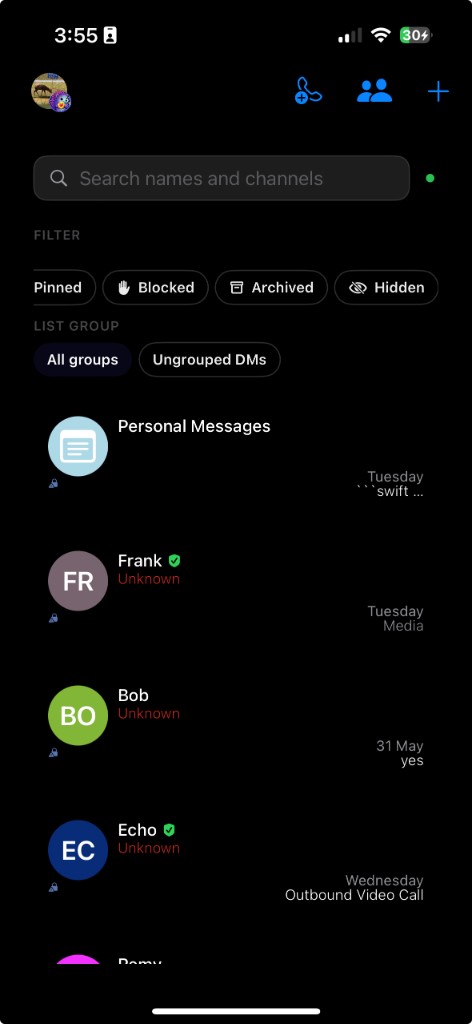
Filter conversations by personal, direct, channels, unread, or pinned—with a clean interface built for everyday use.
Pin, archive, block, or hide chats. Group DMs and channels stay organized with powerful list controls.
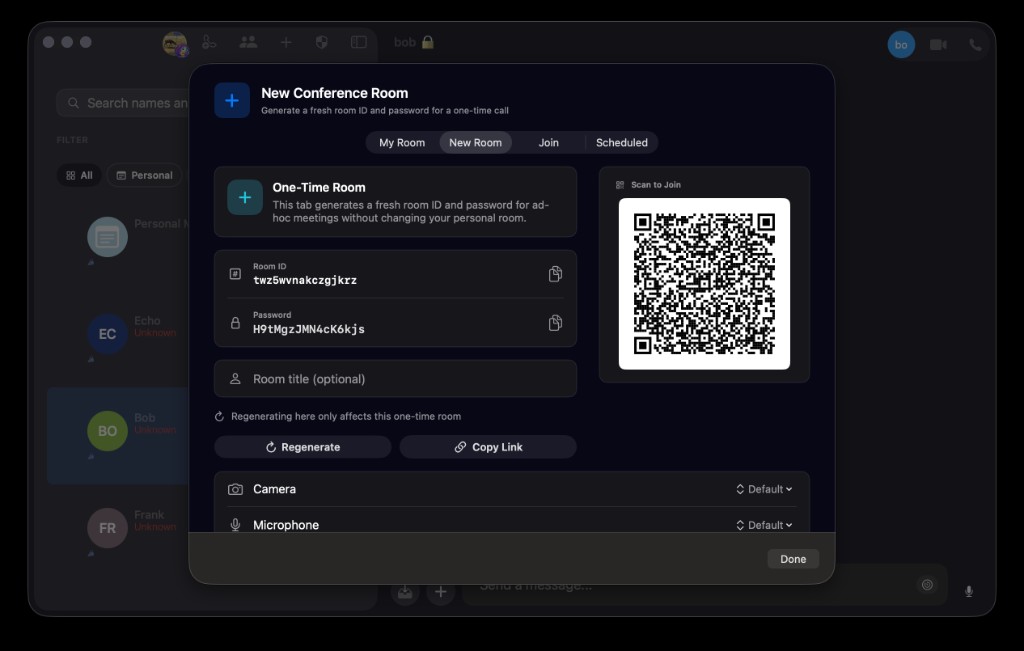
Spin up one-time rooms with unique IDs, passwords, and QR codes. Pick your camera and mic before you join.
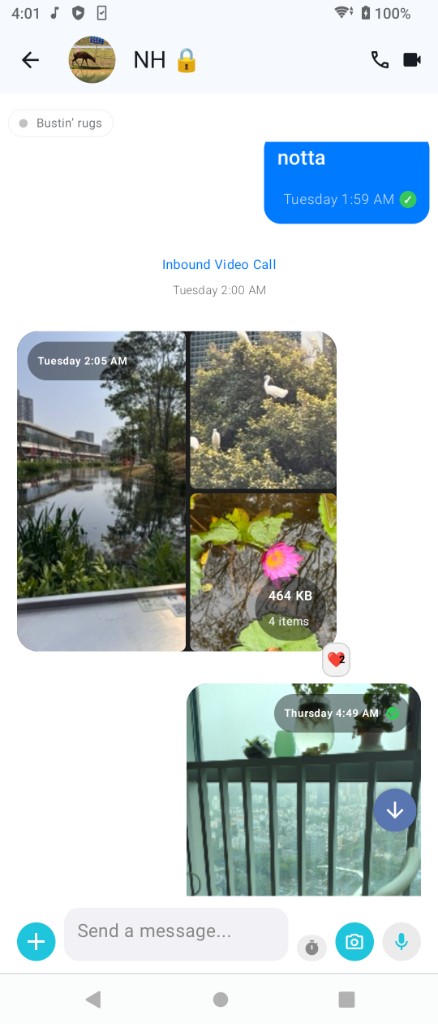
Photo collages, voice notes, read receipts, and inline video calls—always protected with end-to-end encryption.
Nudge is a post‑quantum secure messaging and calling app. It combines a PQXDH handshake (ML‑KEM‑1024 + Curve25519) with Double Ratchet for forward secrecy and post‑compromise security—then wraps it in transports designed to survive real networks.
Messages are encrypted on your device and decrypted only by intended recipients. The goal is simple: keep what matters “in the box”—and keep everyone else out.
Built with multiple transports and fallbacks in mind (e.g., P2P + relays) so communication can keep moving across hostile or unstable networks.
Use the public posture—or deploy a private Nudge community when you need governance, compliance boundaries, and operational accountability.
Realtime communication built for sensitive contexts. Nudge is designed so calling is not an afterthought—security and reliability are treated as first‑class requirements.
Clear responsibility boundaries and a path to private infrastructure. For organizations, NeedleTails can implement and deploy servers for your own Nudge community.
Designed with censorship and transport fallbacks in mind—tested across multiple countries.
When communication is sensitive, you need more than a chat app. Nudge is built to protect content with end‑to‑end encryption, hold up against “harvest now, decrypt later,” and keep working across real‑world networks.
Healthcare conversations can include PHI and high‑stakes decisions. Nudge is a good choice because it’s designed around end‑to‑end encryption, post‑quantum session establishment, and practical reliability—so clinical teams can coordinate while reducing exposure of sensitive content.
Post‑quantum PQXDH + Double Ratchet foundations, with a non‑caching public posture. Deploy privately (self‑host or managed) when you need governance and stricter boundaries.
Use Nudge across iOS, iPadOS, macOS, and Android. It’s designed to support modern teams that communicate across multiple devices—without lowering the security bar.
Transparent, technical answers about what Nudge protects—and what no app can promise.
Nudge is designed around end‑to‑end encryption for messages and calling: plaintext is encrypted on the sender’s device and decrypted only on intended recipients’ devices. The server can relay encrypted packets, but it shouldn’t have the keys needed to read message content.
At a high level: Nudge’s building blocks use a hybrid PQXDH session establishment (ML‑KEM‑1024 / Kyber + Curve25519), then a Double Ratchet design for message key evolution (forward secrecy + post‑compromise security). Symmetric encryption is done with authenticated encryption (e.g., AES‑GCM) and keys are derived using standard KDFs (e.g., HKDF). See the Cryptography page for the deeper protocol walkthrough.
Even with E2EE, networks can still observe things like IP endpoints, message timing, and traffic volume. Some systems also expose identifiers depending on transport. Nudge aims to minimize and encrypt sensitive metadata where supported (for example, encrypted headers can reduce what an intermediary learns about message counters and key identifiers), but no messaging system can eliminate all metadata in every network environment.
The public posture is intended to avoid retaining message content on the server side. If your organization needs governance, audit boundaries, or stricter operational controls (e.g., compliance requirements, incident response workflows), a private deployment is the right model. NeedleTails can implement and deploy Nudge servers for your community for a price.
E2EE protects message content in transit, but it can’t prevent endpoint risks: screenshots, screen recording, someone with physical access to an unlocked device, malware on an endpoint, insecure device backups, or a compromised OS. Also, push notification systems and networks may leak metadata. If you need stronger anonymity or tighter operational controls, consider a private deployment and follow secure-device best practices.
No. Strong encryption dramatically reduces risk, but no app can guarantee absolute safety. Security depends on your threat model and the weakest link—devices, accounts, backups, and human factors. Protect yourself by keeping devices updated, using strong passcodes/biometrics, enabling full‑disk encryption, avoiding untrusted links/files, verifying contact identities when it matters, and assuming screenshots/recordings are always possible on endpoints. If you face a high‑risk adversary, consider operational security, private deployments, and expert guidance.
Nudge is preparing for public release. Contact NeedleTails for release updates, private deployments, or security review conversations.
We use cookies to run the site, remember your preferences, and (optionally) understand usage. You can accept, reject, or customize at any time. Learn more